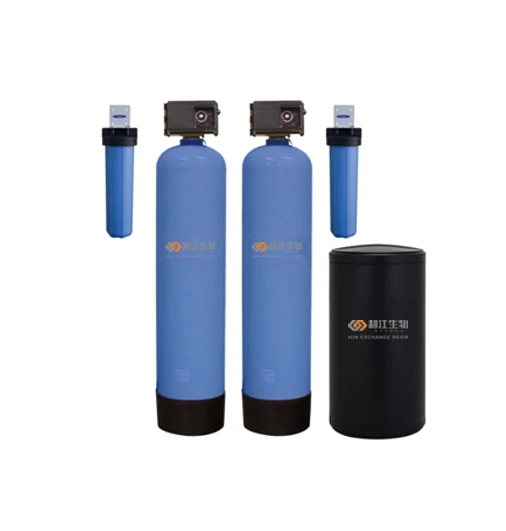
base exchange softener
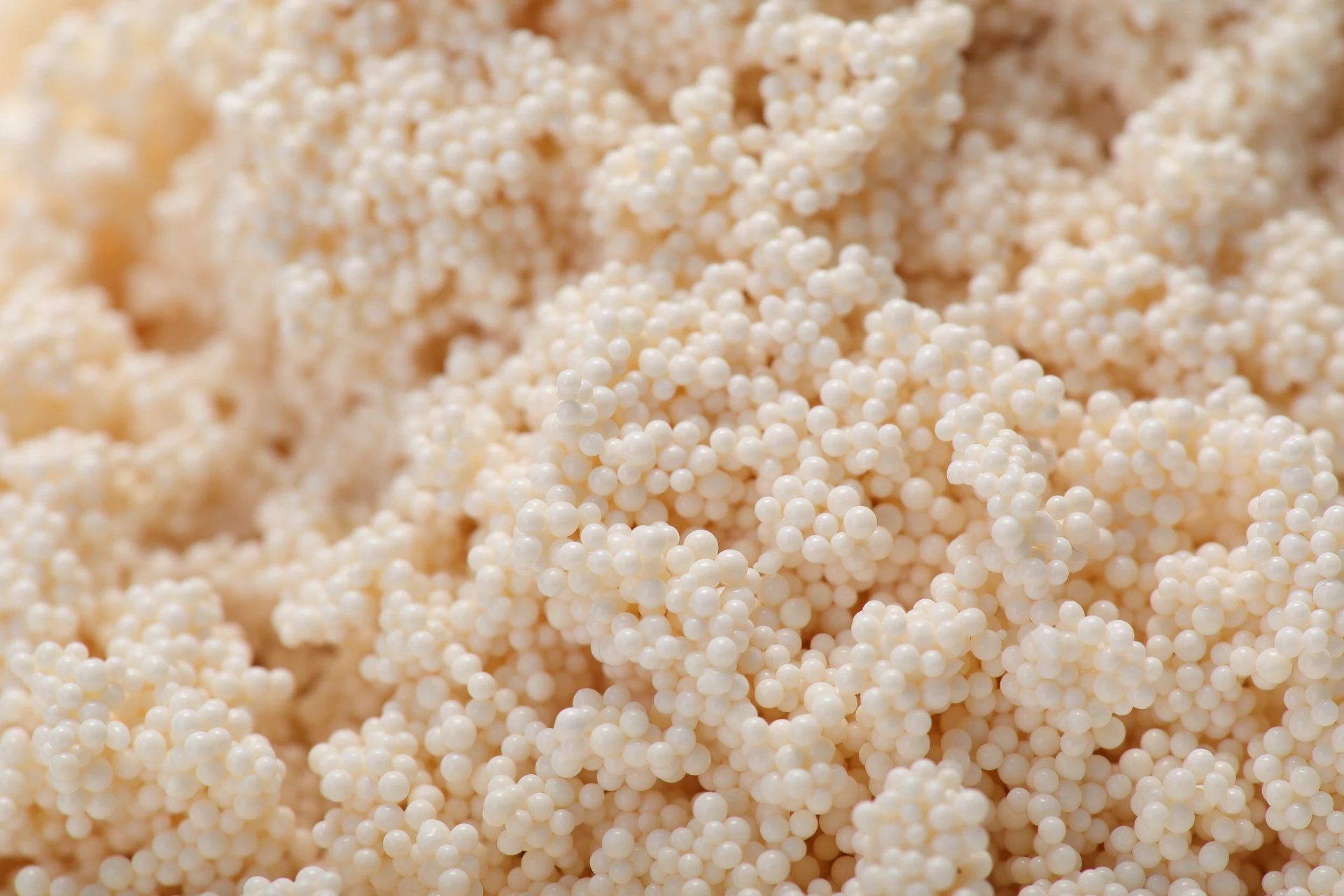
Weak Base Anion Exchange Resin D301 FC: a practical insider’s look If you’ve been scouting for a reliable weak base anion resin for industrial water, sugar decolorization, or tricky chromium waste streams, D301 FC keeps popping up in buyer shortlists. I’ve seen it in mid-scale utilities and, surprisingly, in food plants where uptime is everything. What it is and why it’s trending D301 FC is a polystyrene–DVB, macroreticular resin with tertiary amine functionality (-N(CH3)2). In plain terms, it’s a weak base anion workhorse: high mechanical strength, good organics handling, easy regeneration. The food and beverage guys like it for decolorizing and polishing; electroplaters lean on it for chromium-bearing wastewater (after reduction). The bigger trend? Plants are shifting from one-size-fits-all strong base anions to staged trains where a weak base anion layer takes the brunt of organics and mineral acids, cutting caustic bills. Key specifications (real-world oriented) Parameter Typical Value (≈) Test/Standard Matrix / Structure Polystyrene-DVB, macroreticular ASTM D2187 Functional Group Tertiary amine (-N(CH3)2) FTIR per lab SOP Total Capacity ≈1.2–1.6 eq/L (as free base) ASTM D2187 Moisture Content ≈45–55% ASTM D2187 Particle Size 0.40–1.20 mm; UC ≈1.6 ASTM D4519 Operating pH ≈pH 2–9 (typical) Manufacturer method Max Temp ≈60–70°C (service) Data sheet verification Shipping Form Free base (FB) or Cl- on request COA Service Life ≈3–7 years (feed-dependent) Field records Process flow and operating method Materials: D301 FC resin, NaOH or Na2CO3 for regeneration; optional NaCl rinse; dechlorinated water for sensitive applications. Method (typical): backwash 10–20 min; service run at 5–40 BV/h depending on target; slow rinse 2–4 BV; regenerate with 2–6% NaOH (or 4–8% Na2CO3); displacement rinse; fast rinse to conductivity target. To be honest, I’d pilot your exact chemistry—real-world organics throw curveballs. Testing & QA: incoming inspection to ASTM D2187; potable-water projects often reference NSF/ANSI 61; plants with tight compliance like to see ISO 9001 and COA per batch. Operating capacity may reach ≈3× vs the same resin left in “alkali as-received” state—once fully regenerated and conditioned. Where it’s used (and why it sticks) Water treatment: mineral acids and silica precursors before mixed bed; organics guard for SBA. Sugar decolorization: reduces color bodies; many customers say the pressure drop stays stable run after run. Chromium wastewater: post-reduction polish of Cr(VI)/Cr(III) complexes; pairs well with upstream precipitation. Refining organics: amine capture, acid removal in fine chemicals. Vendor snapshot (quick compares) Vendor / Resin Matrix & Functionality Operating Capacity (≈) Typical Uses Certs (may vary) Lijiresin D301 FC PS-DVB, tertiary amine ≈0.8–1.2 eq/L in service Water, sugar, Cr wastewater ISO 9001; NSF/ANSI 61 on request Purolite (WBA type) PS-DVB, tertiary amine ≈0.7–1.1 eq/L Organics guard, deacidification ISO; NSF lines available DuPont/DOW (WBA type) PS-DVB, tertiary amine ≈0.8–1.2 eq/L Polishing, decarboxylate streams ISO; NSF lines available Customization, feedback, and field notes Custom cuts: tighter UC for low-pressure vessels; pre-sieved fine/large cuts for sugar; food-contact rinsing to conductivity/TOC targets. Certifications: ISO 9001/14001 plant routines; potable water jobs often specify NSF/ANSI 61—ask for lot-level COA and leachables data. Field feedback: “Lower caustic use than our SBA,” one beverage engineer told me. Another said start-up was painless: “Two conditioning cycles and it locked in.” Mini case studies Sugar refinery, ASEAN: color units down ≈35% vs previous media; service run extended 18–22% with same pressure window. Metal finishing plant, EU: hexavalent chromium line—after reduction, weak base anion bed cut Cr to Origin: NO.2 East Jianshe Road, High-Tech Industrial Development South Zone Wei County, Xingtai, Hebei Province, China. Bottom line: if you’re building a modern train, a weak base anion layer like D301 FC is a cost buffer and a reliability anchor. Just pilot your chemistry, set realistic BV/h, and keep a tight eye on organics loading—real-world use may vary. Authoritative citations ASTM D2187 – Standard Test Methods for Physical and Chemical Properties of Particulate Ion-Exchange Resins. ASTM D4519 – Standard Practice for Particle Size Distribution of Ion-Exchange Resins. NSF/ANSI 61 – Drinking Water System Components – Health Effects. WHO Guidelines for Drinking-water Quality, latest edition – Organics and ion exchange guidance.
-
 Strong R & D Capability And Experienced Technical Team
-
Provide Customers With Competitive And Differentiated Products